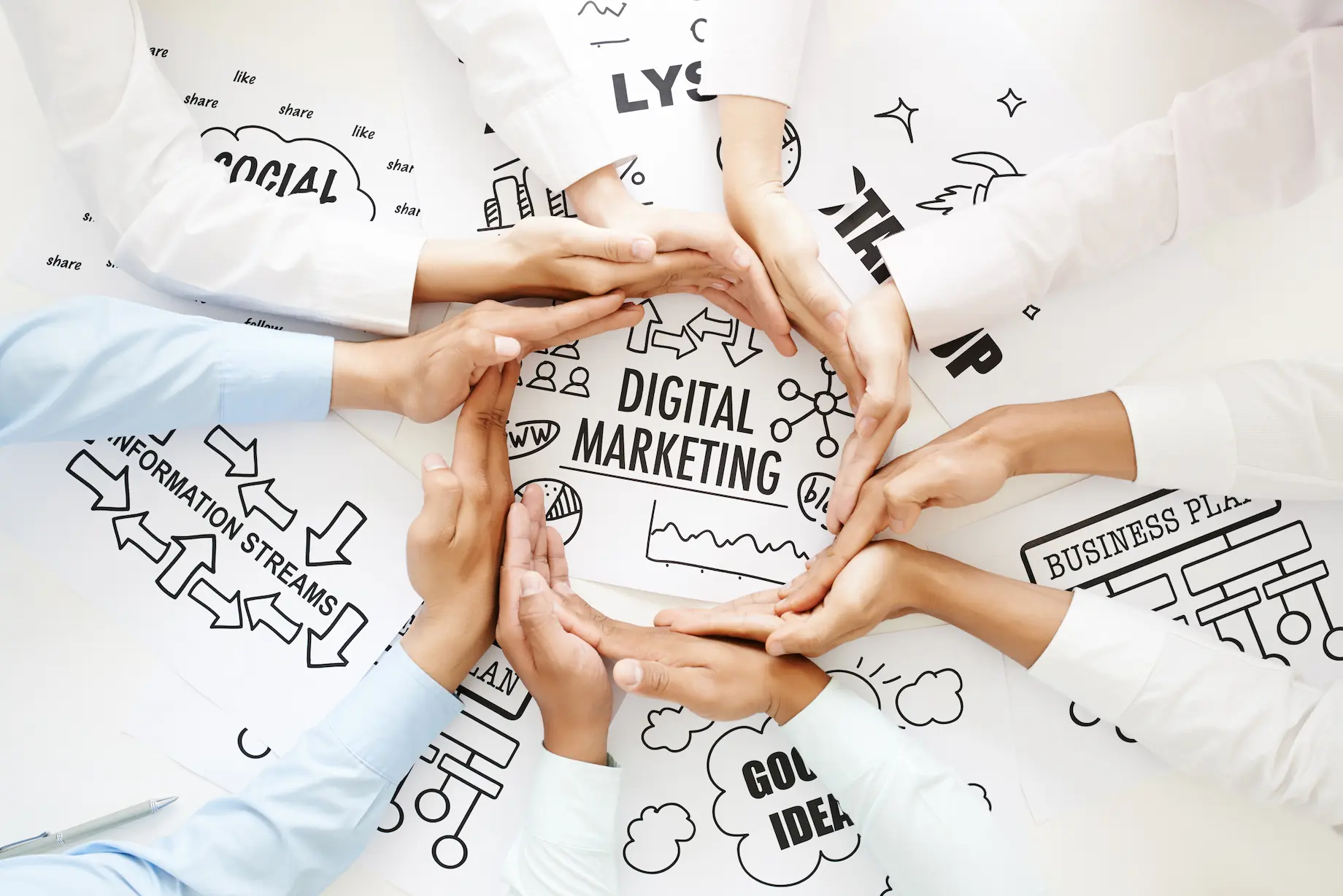
All marketing initiatives that contact, interact with, and convert potential clients online through digital channels are collectively referred to as digital marketing. Businesses may communicate with audiences more accurately and effectively than they could with traditional marketing techniques by utilising the internet, cellphones, social media platforms, search engines, and other digital tools.
What Makes Digital Marketing Vital?
- Global Reach: With billions of people using the internet every day, digital marketing gives you the ability to connect with audiences all over the world, increasing the market potential for your business.
- Precision Targeting: You may connect with the appropriate individuals at the right time with the help of comprehensive targeting choices.
- Cost-Effectiveness: When compared to pricey traditional channels like TV or print, online advertisements and marketing tools frequently offer a higher return on investment.
- Measurable Results: You may swiftly optimise campaigns by using advanced analytics tools to track performance in real-time.
- Personalised Customer Experience: You may greatly increase engagement and conversion rates by customising marketing messages to each person’s preferences using data and analytics.
Essential Elements of Online Advertising
The fundamental digital marketing channels and strategies listed below are essential for any marketer to comprehend:
- SEO, or search engine optimisation
- Definition: Making your website more search engine friendly to improve its ranking.
- Why It Matters: Since the majority of online interactions start with a search query, SEO is essential for exposure.
- Important strategies include link-building, mobile optimisation, keyword analysis, and the production of excellent content.
- Promotion of Content
- Definition: Creating and disseminating worthwhile, pertinent information in order to draw in and involve a target audience.
- Why It Matters: Establishes your brand as an authority in the field and fosters trust.
- Formats: videos, podcasts, infographics, eBooks, and blog entries.
- Marketing on Social Media
- Definition: Using social media sites to interact with consumers, build brand awareness, and increase traffic.
- Why It Matters: Social networks provide great chances for brand development because audiences spend a lot of time there.
- Platforms: Twitter, Pinterest, TikTok, Facebook, Instagram, and LinkedIn.
- Email Promotion
- Definition: Using email campaigns to promote offerings, nurture leads, and keep up with consumers.
- Why It Matters: Its direct approach and personalisation capabilities result in a high return on investment.
- Best Practices: Make sure your designs are responsive, segment your email list, and personalise your subject lines.
- Advertising with Pay-Per-Click (PPC)
- Definition: Paid advertising, such as Google Ads, in which you only pay when a user clicks on your ad.
- Why It Matters: Offers instant exposure on social media and search engines.
- Important factors to take into account include landing page optimisation, keyword selection, and persuasive ad copy.
- Mobile Advertising
- Definition: Marketing tactics that target people on mobile devices through push notifications, SMS, apps, or mobile-friendly websites.
- Why It Matters: Mobile users account for a significant amount of internet traffic.
- Strategies: SMS advertising, mobile app marketing, and location-based advertisements.
- Marketing using Videos
- Definition: Using videos on websites like YouTube, TikTok, or social media feeds to promote goods, services, or content.
- Why It Matters: Due to its captivating format and ability to increase conversions, video consumption is on the rise.
- Techniques: live streaming, product demonstrations, behind-the-scenes videos, and tutorials.
Dollar Shave Club is a real-world case study.
- Challenge: Upend a cutthroat industry where well-known razor brands predominate.
- Strategy for Digital Marketing:
- Viral Video: Started a low-budget, funny YouTube commercial that went viral.
- Social Media Engagement: Made use of Twitter and Facebook to interact with clients directly, create communities, and promote sharing.
- Content Marketing: Blog entries about men’s lifestyle and grooming to inform and amuse readers.
- Findings:
- A sharp increase in subscriptions and quick brand recognition.
- Acquired by Unilever for approximately $1 billion, demonstrating the effectiveness of focused digital tactics.
Professional Opinions
“Machine learning and artificial intelligence will be essential for tailored marketing strategies in the near future. Marketers will be able to provide highly relevant information and offers if they have a detailed understanding of consumer preferences.
— Marketing Innovations’ Head of Digital Strategy, Dr. Sarah Thompson
“Transparency and trust will become the new currency of digital marketing as data privacy laws change. Companies that put an emphasis on using data ethically will stand out.
— James Lawson, AdTech Global’s Chief Data Officer
New Developments in Online Advertising
- Machine learning and artificial intelligence (AI)
- Facilitates real-time automated decision-making, predictive analytics, and sophisticated segmentation.
- Optimisation of Voice Search
- As voice assistants like Alexa, Siri, and Google Assistant become more popular, it is essential to optimise for voice requests.
- Virtual reality (VR) and augmented reality (AR)
- Cutting-edge companies are utilising immersive experiences to improve narrative and showcase products.
- Conversational marketing and chatbots
- Provides prompt responses, round-the-clock customer service, and tailored suggestions.
- Content Created by Users (UGC)
- Promoting content creation and sharing among audiences builds trust and a sense of community.
Questions and Answers (FAQ)
Q1: Are big firms the only ones that should use digital marketing?
Not at all. Digital marketing gives small and medium-sized businesses (SMEs) a lot of advantages. By providing affordable means of reaching new audiences, technology frequently levels the playing field.
Q2: In digital marketing, what is the most crucial measure to monitor?
Your objectives will determine this. While some companies monitor social media engagement or brand awareness, others concentrate on conversions (sales or sign-ups). Choose metrics (KPIs) that support your goals after you have defined them.
Q3: How long does it take for SEO to provide results?
SEO is a sustained approach. Although you might notice little changes in a few weeks, constant work over several months usually yields significant benefits.
Q4: Does PPC advertising require a significant budget?
Not always. PPC ads can be scaled to accommodate different spending limits. The ideal strategy is frequently to start small and optimise depending on performance data.
In conclusion
Digital marketing has completely changed how companies communicate with their customers and is more than simply an online version of traditional marketing. Brands may develop highly focused campaigns that produce quantifiable, scalable outcomes by utilising a variety of channels, including email, social media, content marketing, and SEO. Continuous learning, data-driven decision-making, and adjusting to ever changing customer behaviours and technological advancements are essential for success in digital marketing.
A well-thought-out and innovative digital marketing plan is crucial, regardless of whether you’re an established company trying to increase your online presence or a startup trying to find a place in a cutthroat market. The secret to succeeding in the digital age is to embrace new technologies, keep up with changing customer tastes, and never undervalue the impact of compelling storytelling.
Are You Prepared to Improve Your Digital Marketing Approach?
Put the advice given here into practice, continue experimenting with different platforms, and concentrate on providing your audience with real value. The potential of digital marketing is enormous; use it with accuracy, originality, and strategic focus, and see how your company expands.